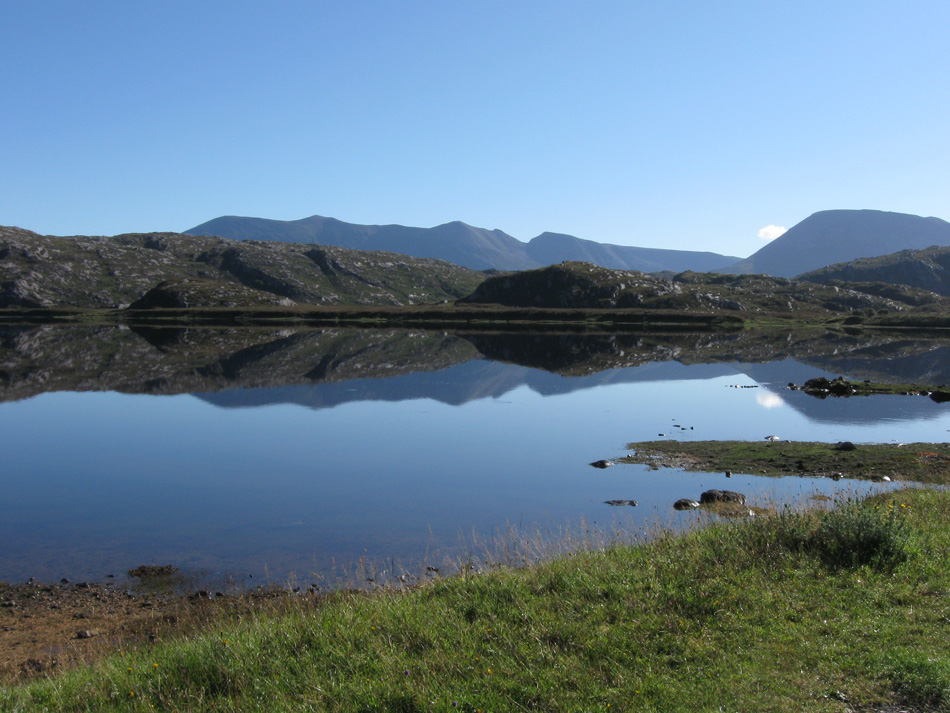
A very still morning, on way to go up Foinaven. Perfect conditions for midges
Why is Foinaven a classic? It is quite a distinctive ridge, with a lot of variety, and fantastic views. Its relative remoteness from road traffic gives the place a feeling of being immersed in the hills.
We had good weather on this day. There is a long walk-in to get on to the Foinaven range. We took a route across the extensive bog, finding places to cross the deep streams on the way, and negotiating the countless lochans covering the bog. The ground was very uneven, and in places you could hear the loud sounds of underground streams right below your feet. It would have been a much worse trudge in wet conditions. One effect of the bog around Foinaven is that the inaccessibility keeps many people away. On the day we went, we had the place to ourselves all day.
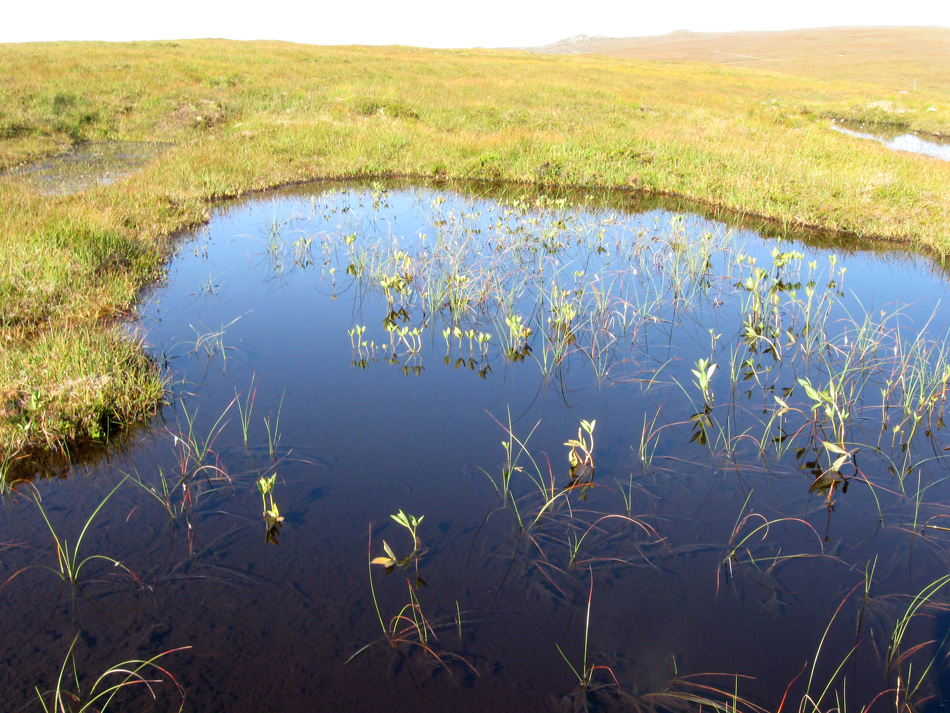
Some bog vegetation in one of the many lochans that we negotiated along the way on the approach to Foinaven
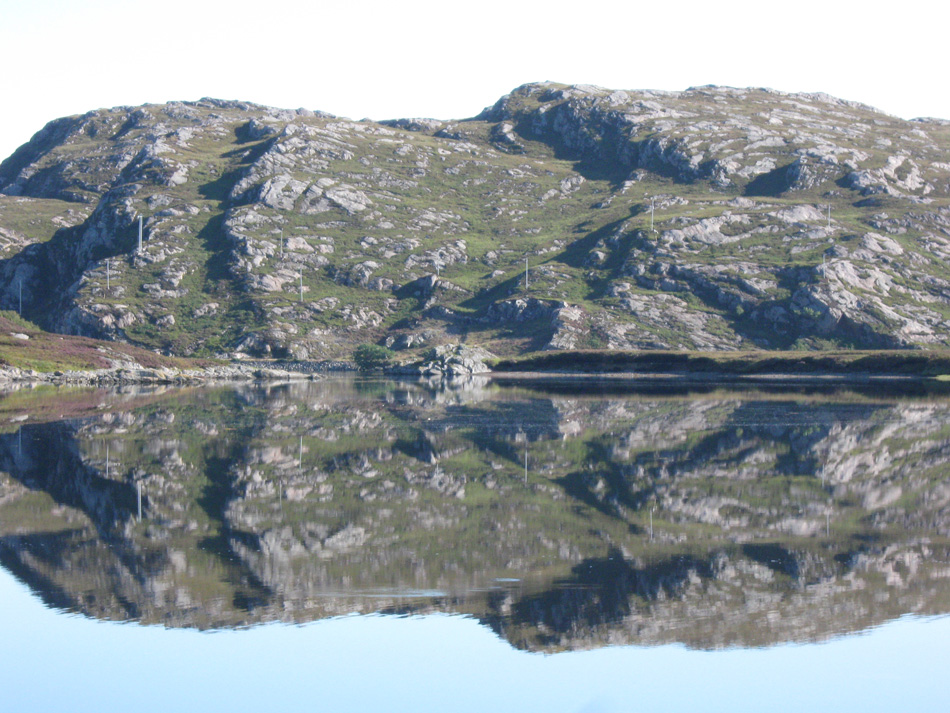
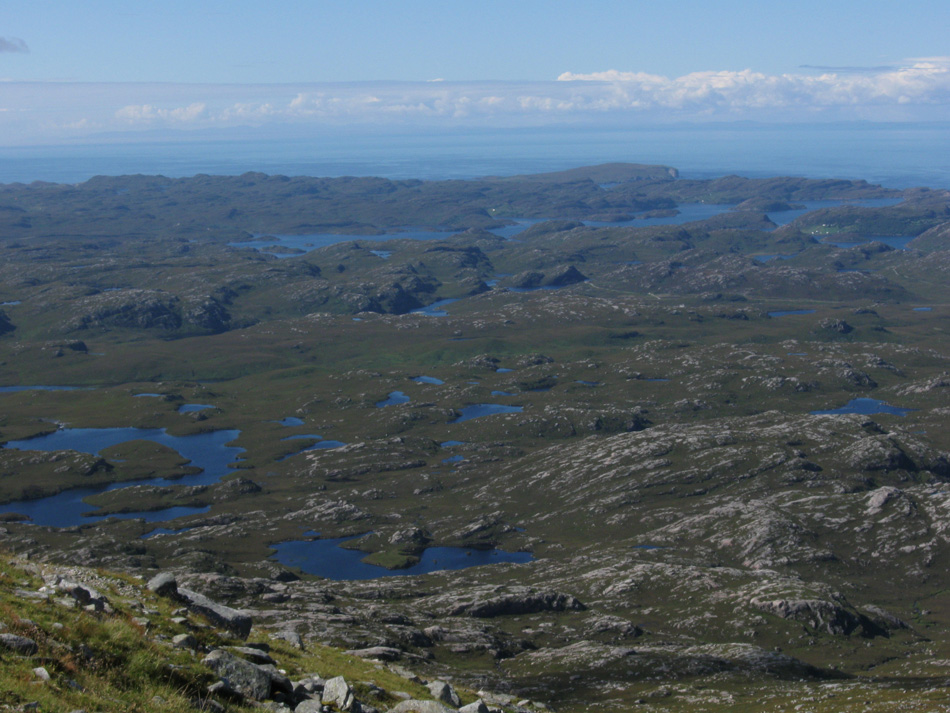
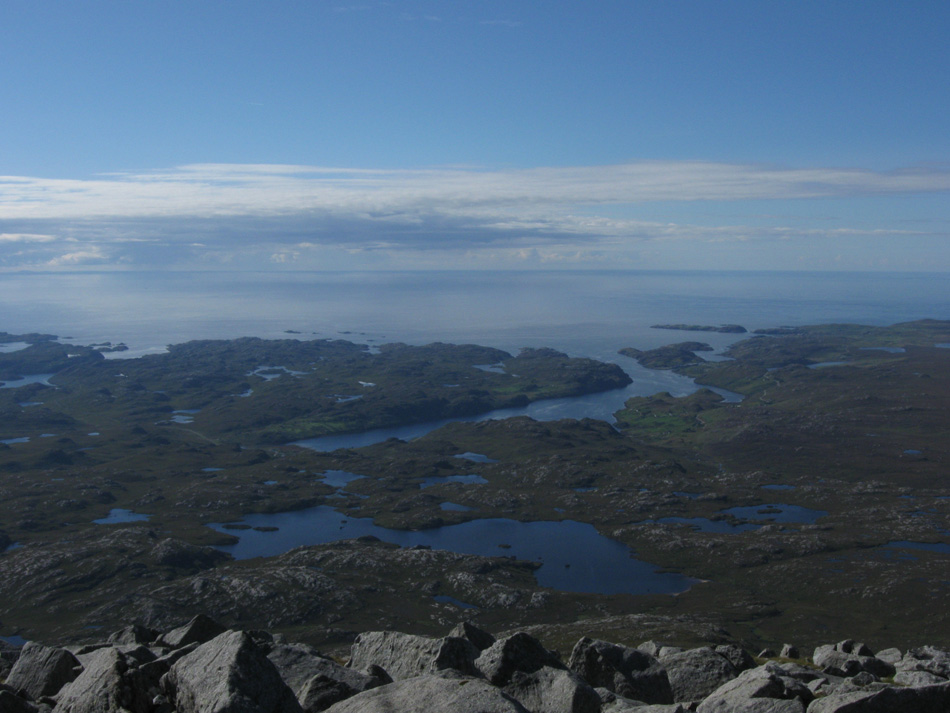
So much water, amongst the ancient gneiss (3400 million years old, and the oldest known rocks in Europe!) – view on way up Foinaven. It felt like a very long way to the top.
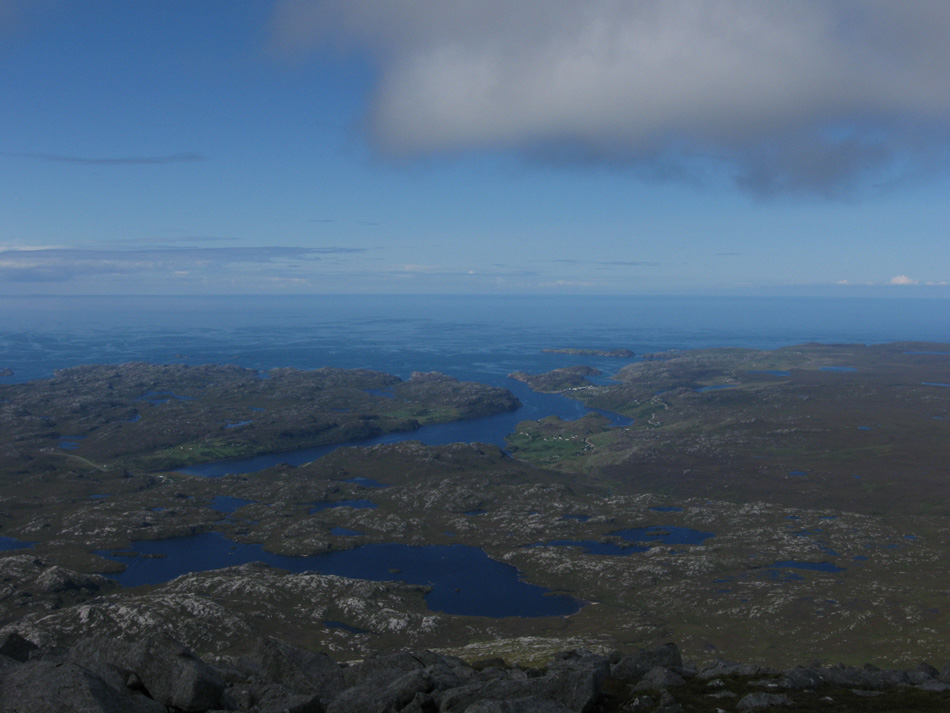
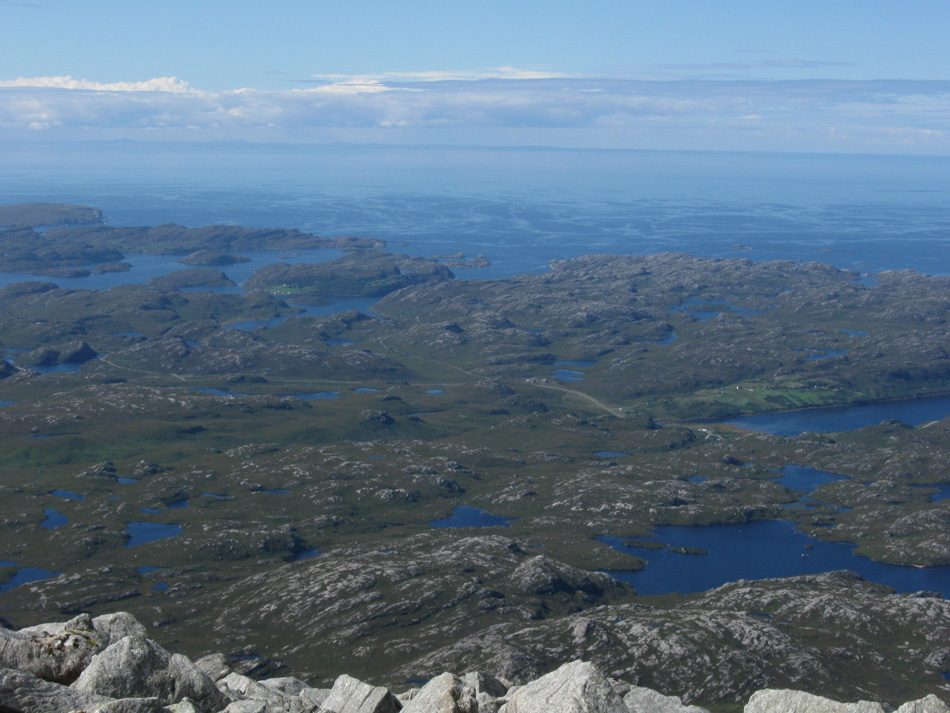
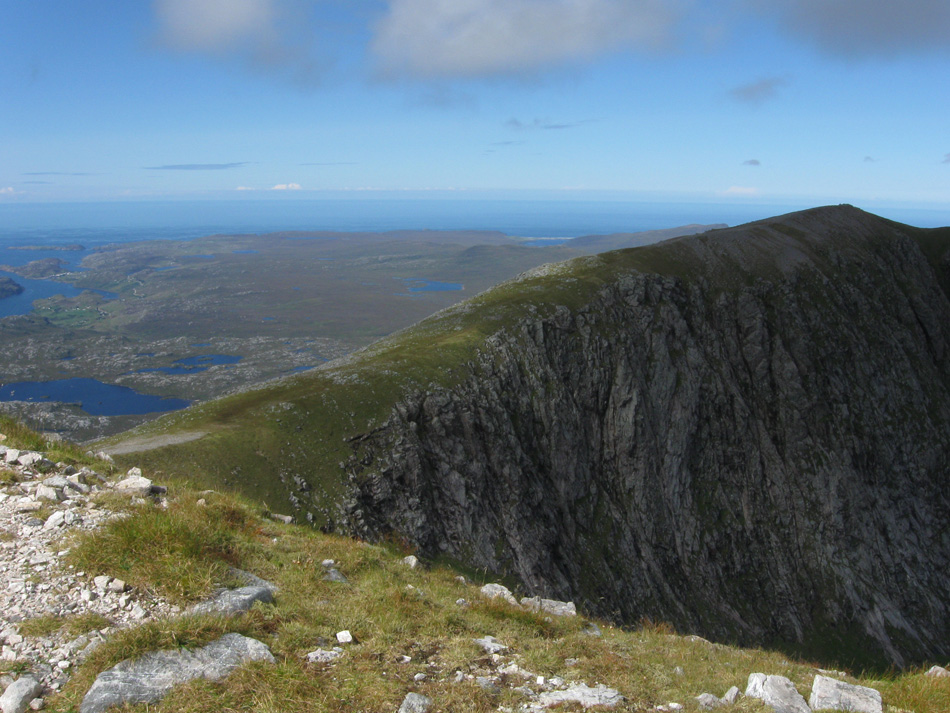
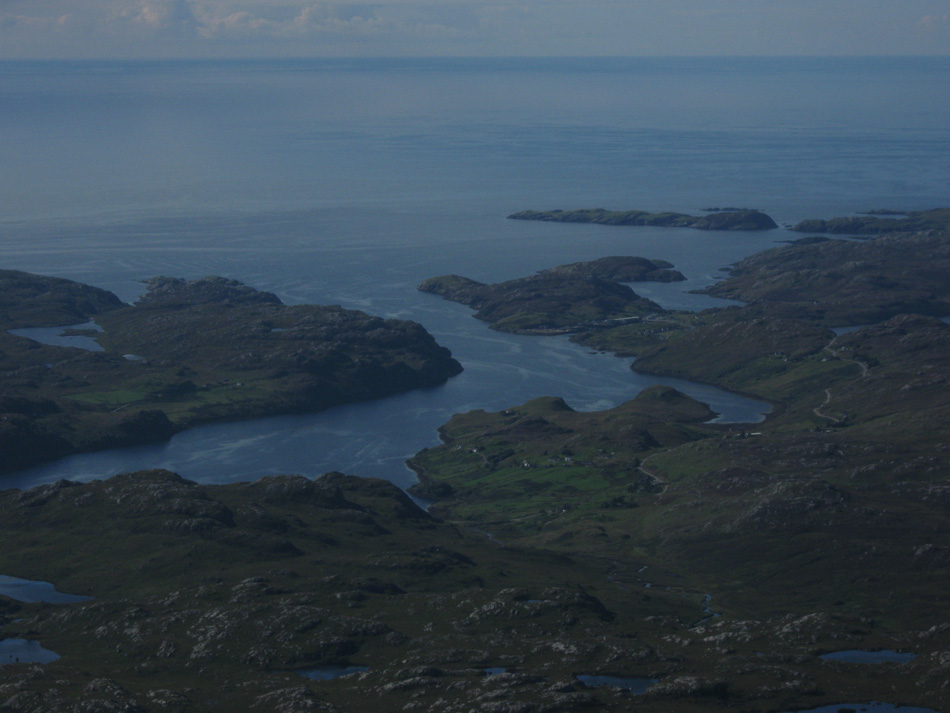
Looking west out to the sea. You can see some habitation down in Achriesgill by Loch Inchard (a sea loch)
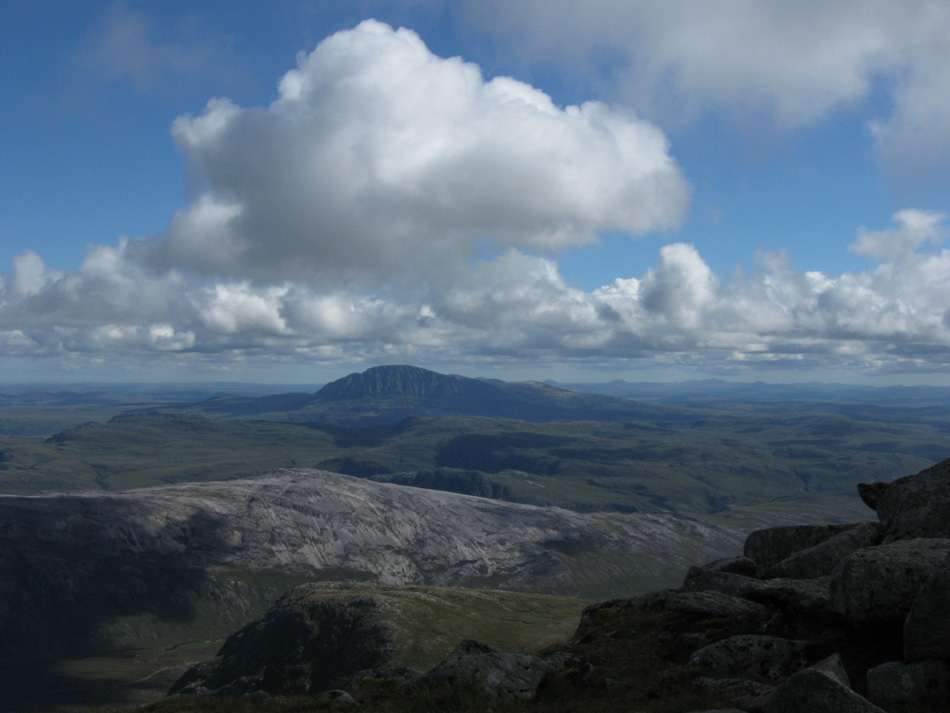
A clearer view of Ben Hope, the most northerly Munro
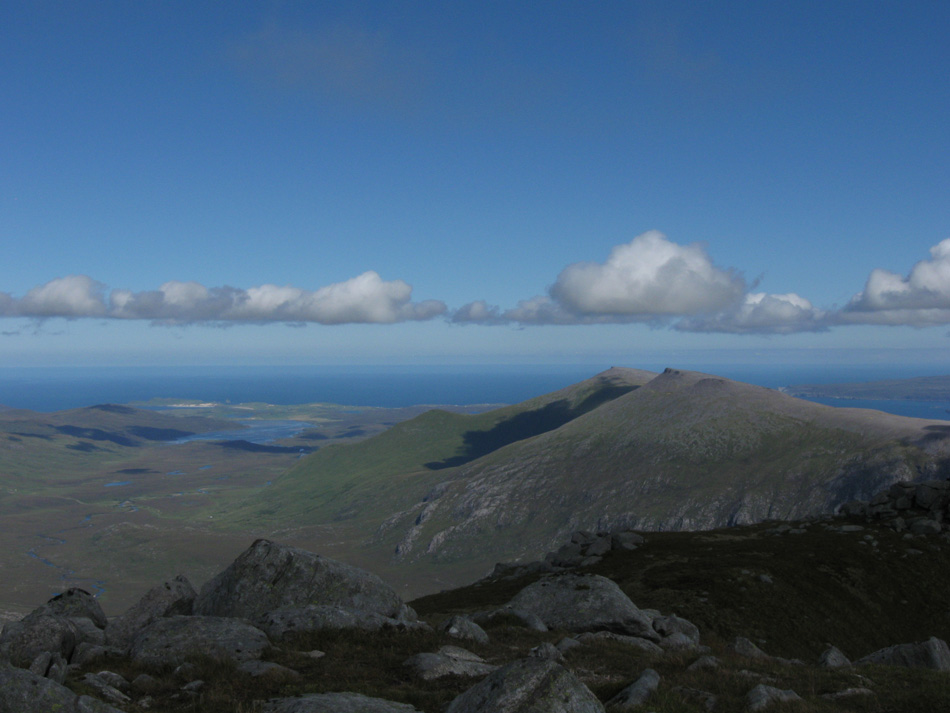
Cranstackie and Beinn Spionnaidh in middle distance, with the Kyle of Durness and Balnakeil Bay near the most north-western end of Scotland in the far distance
That’s the A road down there
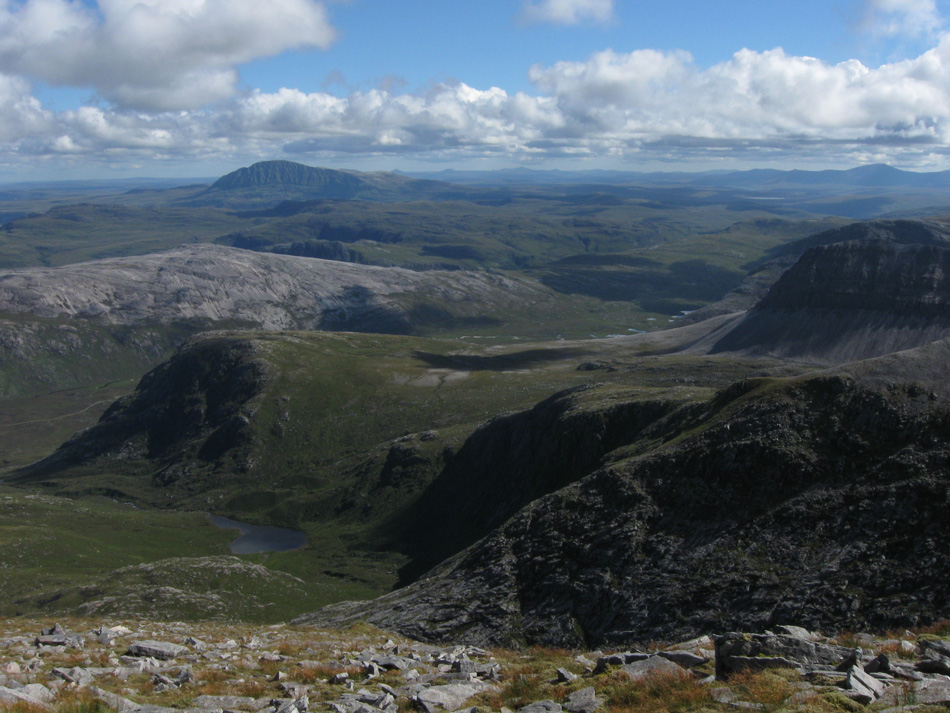
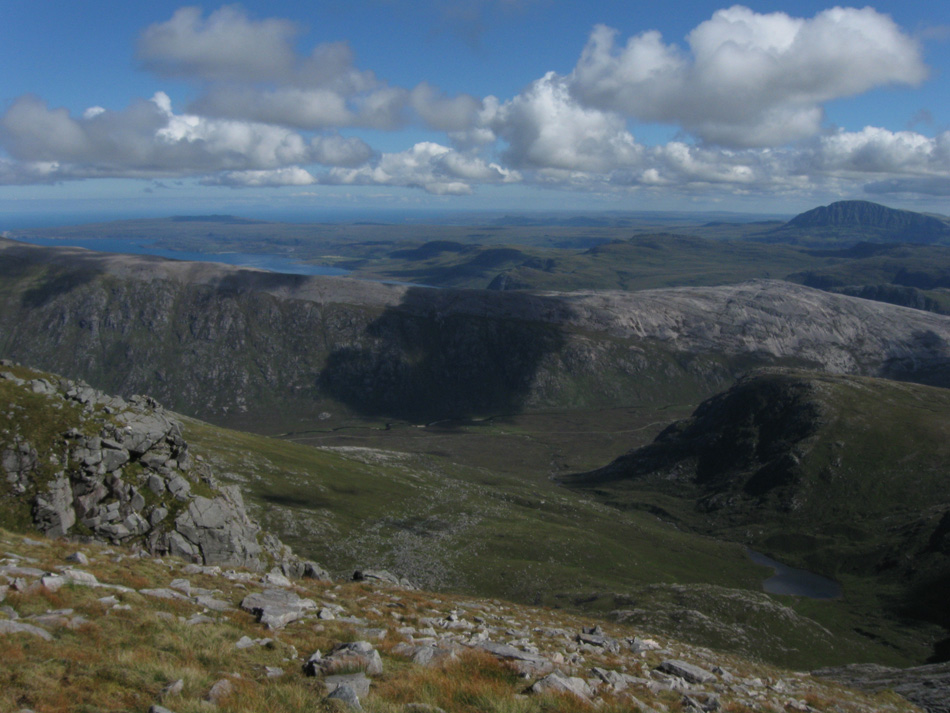
The mountains are a bit more spaced out in the Far North. Ben Hope in the far distance, the pale Conamheall just behind Strath Dionard with its River Dionard in the middle distance, and Coire Duail closer on the left, containing a little lochan whose stream flows into River Dionard
A peek of Loch Eriboll (another sea loch) over the top of the long tapering ridge of Cranstackie (connecting to Conamheall)
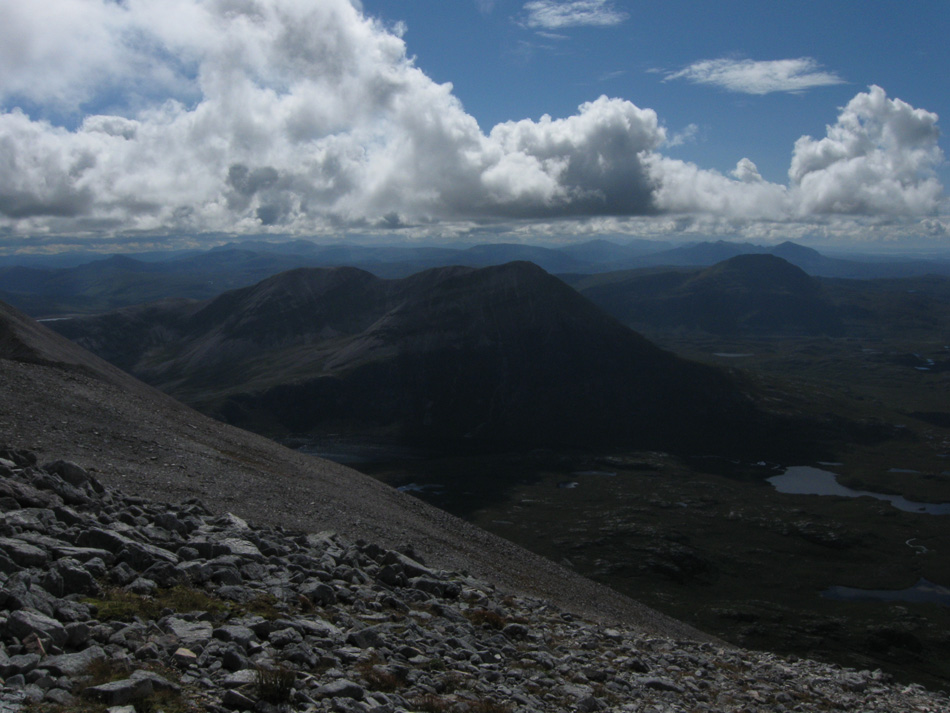
Arkle seen from Foinaven
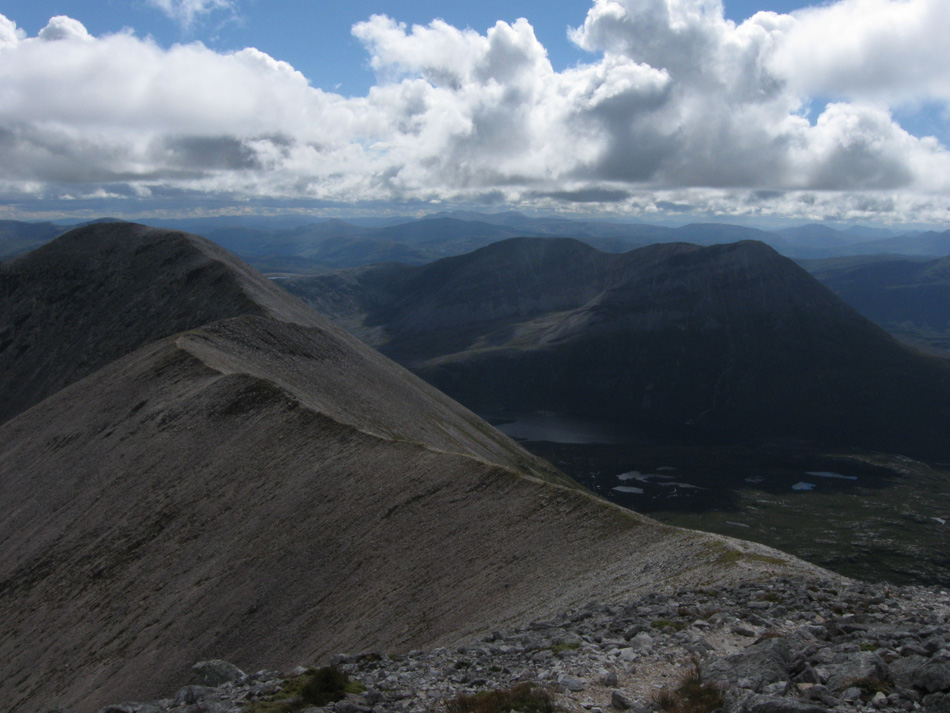
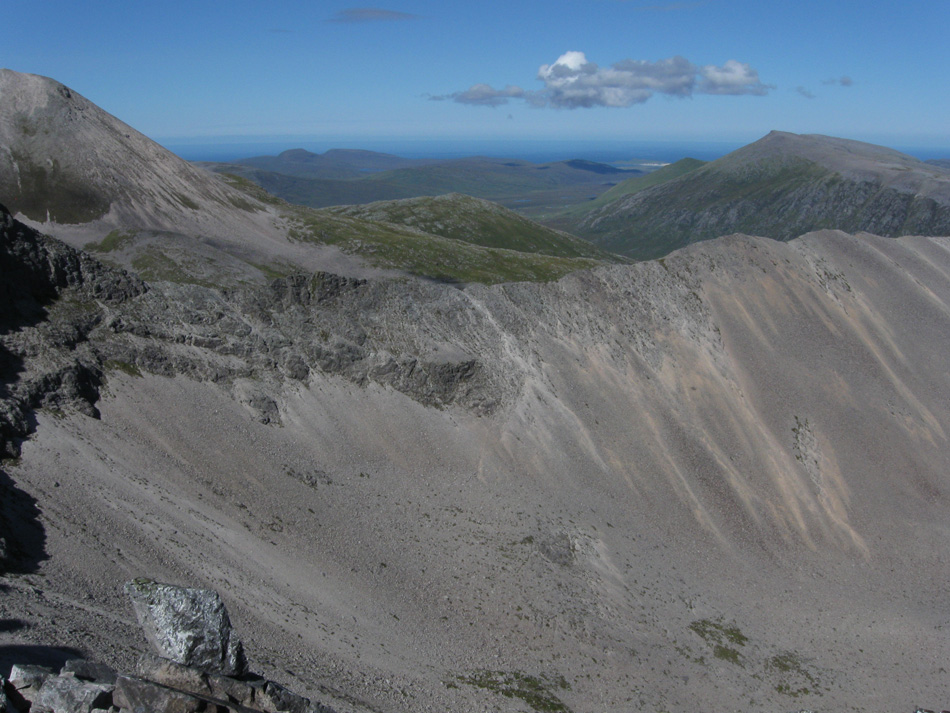
Looking from Ganu Mor at the way we came (further along the ridge to the right, off the image, is Ceann Garbh), which was also the way back (including that extensive bog-crossing to look forward to)
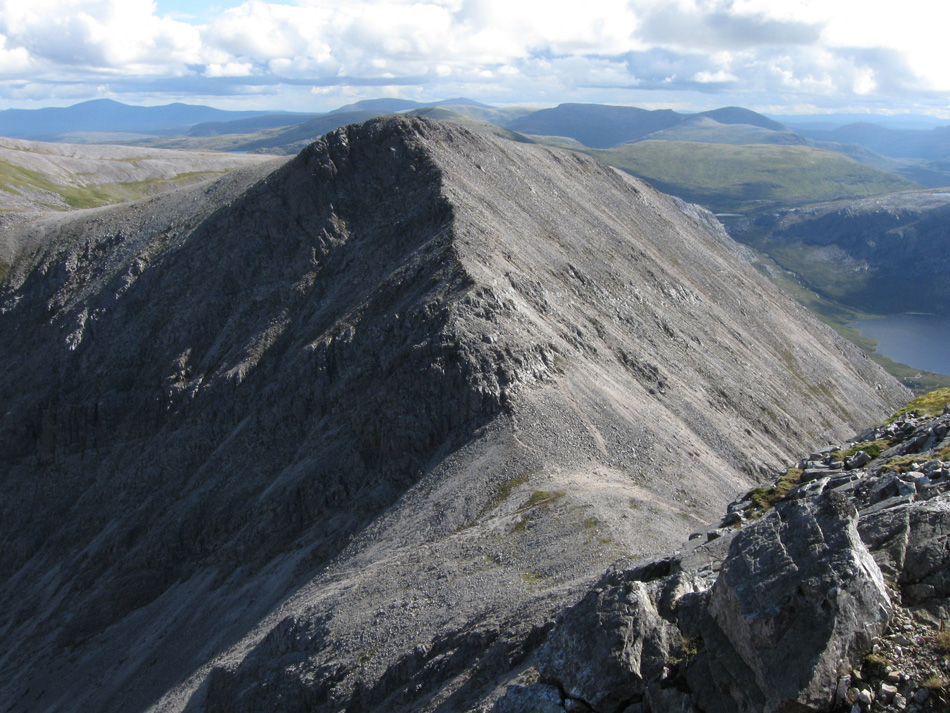
Top 869m, the highest point at the ‘root’ of the knife-like side ridge A’ Cheir Ghorm is the highest point on the ridge visible on the right, with Lord Reay’s Seat a bit further along
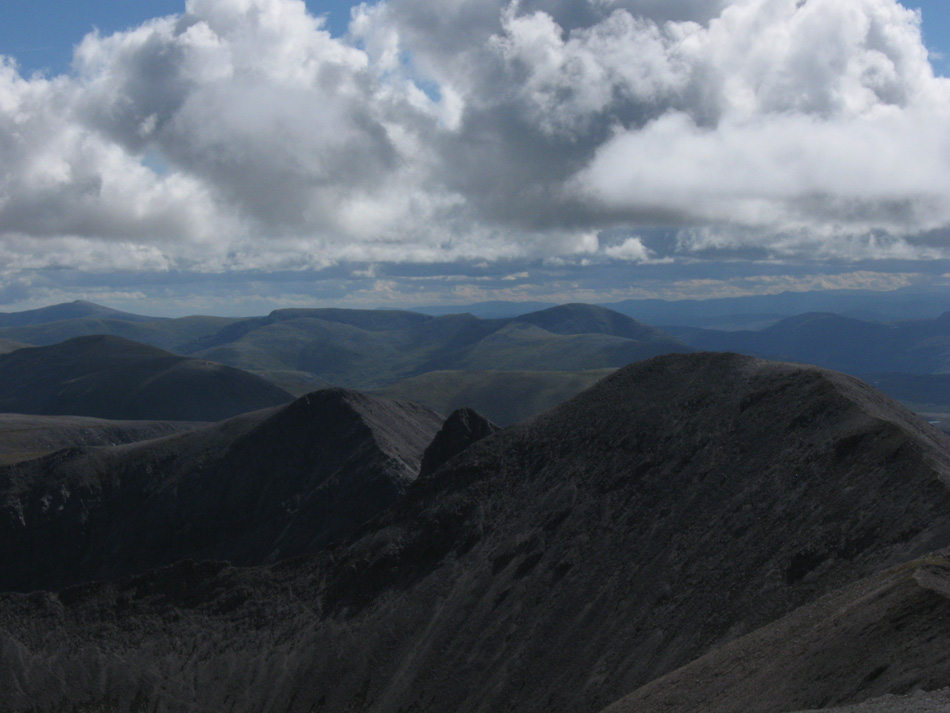
Foinaven ridge – looking towards Top 869m from Ganu Mor. Arkle visible beyond
Looking from Lord Reay’s Seat back to the nameless top 869m. To the right of this is the A’ Cheir Ghorm side ridge. (Photo courtesy of Brian Hodgson – since his card was full and I had lent him my camera!)
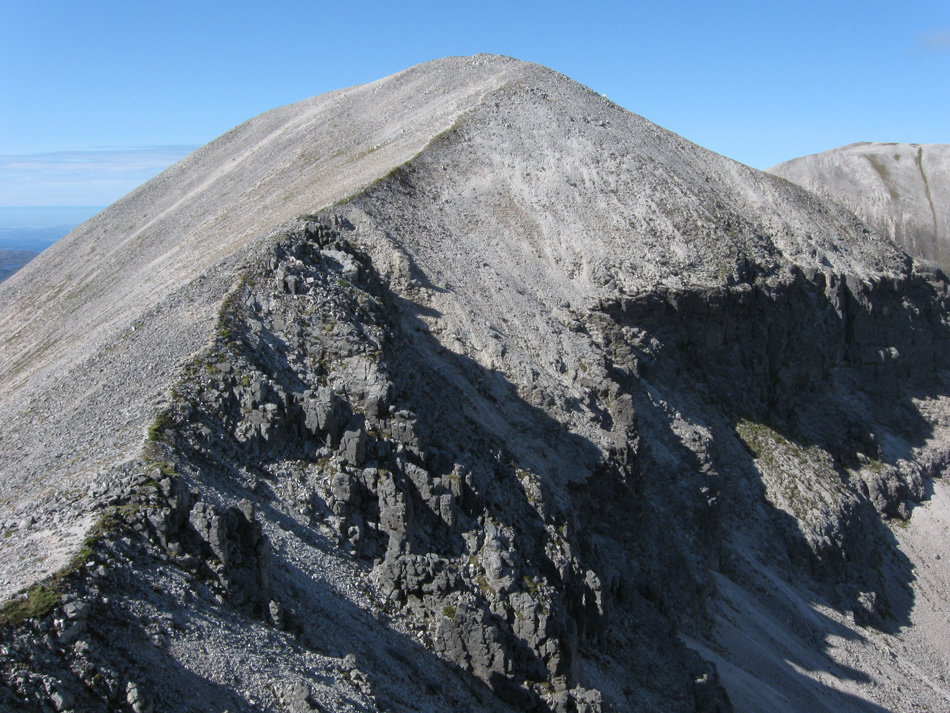
Part of A’ Cheir Ghorm ridge. One side of it is a smooth slope covered in scree. The other side is a bit rockier. (Photo courtesy of Brian Hodgson)
Nameless top 808m, the last top on Foinaven. We turned back from Lord Reay’s Seat as it had taken us a while to get there, and we had to go the same way back. (Photo courtesy of Brian Hodgson)
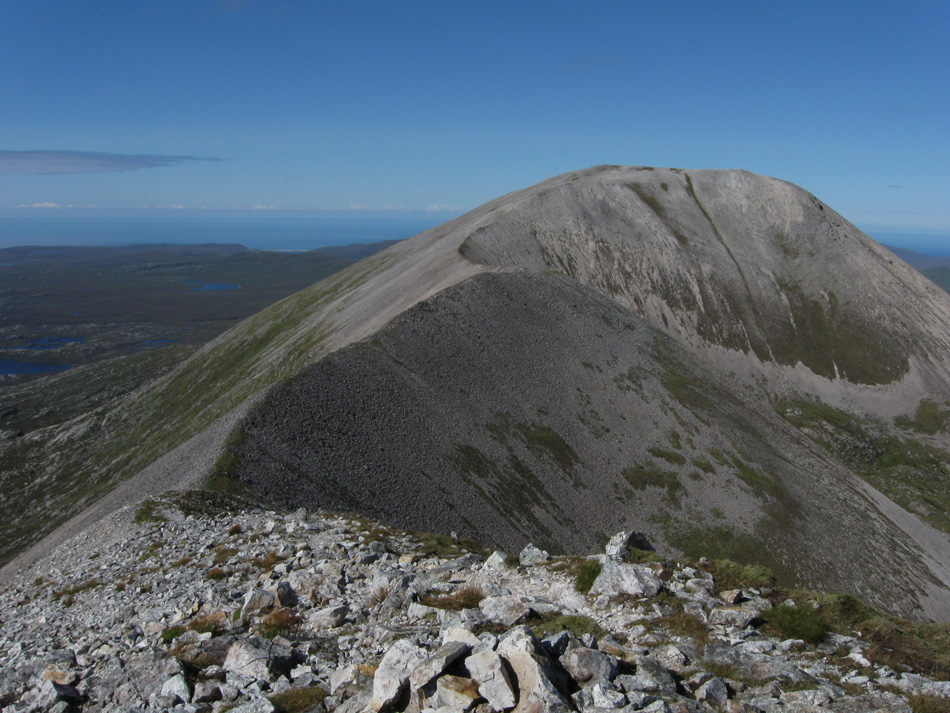
Foinaven ridge – looking from Ganu Mor to Ceann Garbh
Looking seawards. You can see the currents in the water
View seawards again on the way back out. Still a bit of a way to go, not forgetting the bog crossing